Krka National Park: The Complete Visitor's Guide (2026)
Krka National Park is one of Croatia's most spectacular natural attractions — a river canyon carved through white limestone, filled with a series of cascading waterfalls, turquoise pools, and ancient monasteries hidden in the forest. Unlike Plitvice, where swimming is forbidden, Krka famously allowed visitors to swim directly beneath its waterfalls for decades — an experience unlike anything else in Europe. While swimming restrictions have changed in recent years, the park remains extraordinary and well worth a full day of your time.
This guide covers everything — how to get there, which entrance to use, what to see, when to go, and how to make the most of your visit.
Quick Links — Plan Your Krka Visit
🎟️ Book a guided Krka day trip from Split
🚗 Car rentals in Croatia — ideal for visiting Krka
🏨 Hotels near Krka National Park
🛡️ Travel insurance for Croatia
📱 Croatia eSIM
Why Visit Krka?
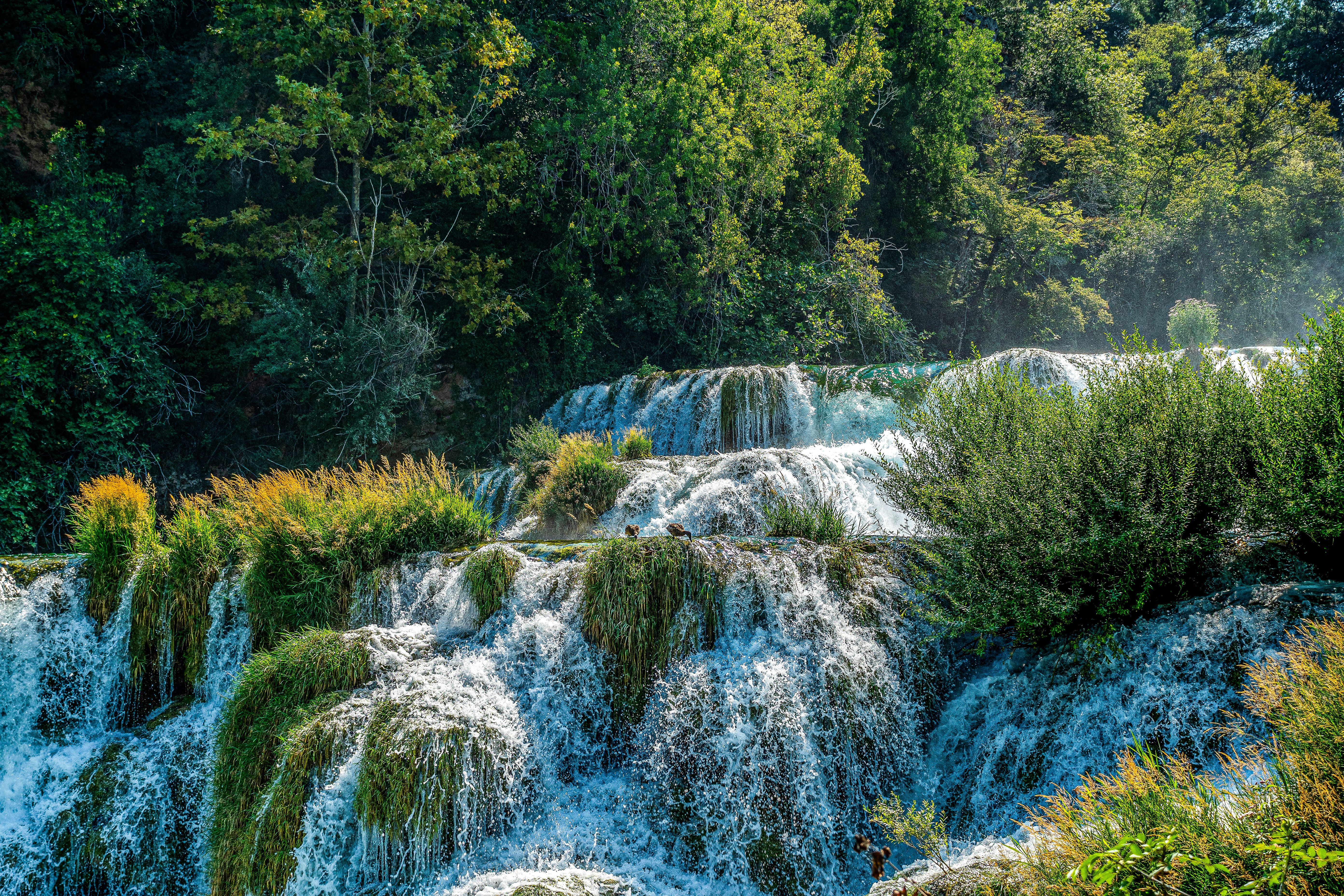
Krka sits in a different league from most European nature parks. The Krka river drops 242 metres over its 73km length, creating a series of dramatic waterfalls and lakes along the way. The main attraction — Skradinski Buk — is a 17-step cascade of travertine waterfalls stretching 800 metres, surrounded by lush forest and connected by wooden boardwalks.
But Krka isn't just waterfalls. The canyon contains Visovac Island with its 15th-century Franciscan monastery, the medieval fortress of Roski Slap, ancient Roman ruins at Burnum, and a river so clear you can see the bottom at 10 metres depth. It's a living landscape with centuries of history layered into its canyon walls.
It's also significantly less visited than Plitvice — which means shorter queues, lower prices, and a more relaxed atmosphere. And unlike Plitvice, it's only 1.5 hours from Split, making it the most accessible major national park in Dalmatia.
Practical Information
Opening hours: Open year-round. Summer hours 8am–8pm, reduced hours in shoulder and off seasons.
Entry fees (2026 approximate):
Peak season (July–August): €30–35 per person
Shoulder season (April–June, September–October): €20–25
Off-season (November–March): €7–10
Children under 7: free
Book tickets online in advance in peak season. The park has daily limits and can sell out on busy summer days.
How long to spend: 3–4 hours for Skradinski Buk only. A full day if you're taking a boat trip to Visovac Island or exploring Roski Slap as well.
Getting to Krka National Park
By Car — Best Option
Driving gives you maximum flexibility and is the easiest way to reach all sections of the park. The park is located near the town of Šibenik on the Dalmatian coast.
From Split: About 1.5 hours (90km) via the A1 motorway north
From Zadar: About 1 hour (80km) via the A1 motorway south
From Šibenik: About 15–20 minutes — the closest major town
There are parking areas at both Entrance 1 (Skradin) and Entrance 2 (Lozovac). Arrive early in peak season — parking fills up by mid-morning.
👉 Compare car rental prices in Croatia
By Organized Tour from Split
The most popular option for visitors based in Split. Day tours handle transport, park entry, and typically include the boat ride from Skradin to Skradinski Buk — the most scenic way to enter the park. Tours run daily throughout the summer season.
👉 Book a Krka day trip from Split
By Bus from Split
Buses run from Split to Šibenik regularly (about 1.5 hours). From Šibenik you can take a local bus or taxi to the Skradin entrance. Manageable but less convenient than a car or organized tour.
The Two Main Entrances
Entrance 1 — Skradin (Lower Entrance) The most popular and scenic entry point. From the town of Skradin, a 30-minute boat ride takes you up the Krka river estuary directly to Skradinski Buk waterfall — arriving from the water is one of the best ways to experience the park. The boat is included in your entry ticket. This is the entrance to use if it's your first visit.
Entrance 2 — Lozovac (Upper Entrance) A road entrance higher up in the canyon, with a shuttle bus down to Skradinski Buk. Less atmospheric than arriving by boat but faster and more convenient if you're driving and short on time. Also used by tour groups with coaches.
Recommendation: First-time visitors should use the Skradin entrance for the boat approach. If you're returning or short on time, Lozovac is more practical.
What to See in Krka
Skradinski Buk — The Main Waterfall
The centerpiece of the park and one of the most beautiful waterfalls in Europe. Seventeen travertine steps drop the Krka river 45 metres, creating a series of pools, cascades, and channels that you can walk around on well-maintained wooden boardwalks. The scale is impressive — at its widest point the falls stretch 200 metres across.
The boardwalk circuit around Skradinski Buk takes about 1.5–2 hours at a relaxed pace. The lower section is the most dramatic — the sound of the water, the spray in the air, and the turquoise color of the pools make it genuinely breathtaking.
Note on swimming: Swimming at Skradinski Buk was banned in 2021 to protect the travertine ecosystem. The park has designated swimming areas in other sections of the river — check current regulations at the entrance.
Visovac Island
A tiny island in the middle of Visovac Lake, home to a remarkably well-preserved 15th-century Franciscan monastery. The island appears suddenly as you round a bend in the river — a cluster of cypress trees, stone walls, and a church tower rising from flat water, surrounded by canyon walls. It's one of the most photogenic spots in all of Croatia.
Access is by boat tour from inside the park. The tour includes a guided visit to the monastery, which houses an important collection of manuscripts, religious art, and a copy of Aesop's Fables dating to 1487.
👉 Book a Krka National Park boat tour including Visovac
Roski Slap
A second major waterfall system about 13km upstream from Skradinski Buk, accessible by boat from Visovac. Less visited than Skradinski Buk and completely different in character — a wider, more spread-out series of cascades through a broader canyon, with old water mills on the banks and a more peaceful, remote atmosphere. Worth combining with a Visovac boat trip if you have a full day.
Burnum Roman Ruins
On the canyon plateau above the river, the remains of a Roman legionary fortress and amphitheater sit largely unexcavated in open countryside. Not as dramatic as the waterfalls but fascinating for history lovers — and almost completely uncrowded. Accessible by car from the upper park road.
Krka Monastery
A Serbian Orthodox monastery on the riverbank near the town of Kistanje, founded in the 14th century. Less visited than Visovac but equally atmospheric — ancient stone buildings in a green riverside setting. Entry is free.
Best Time to Visit Krka
April & May — Excellent. Water levels are high after winter, making the waterfalls at their most powerful. Crowds are light and prices are at their lowest. The canyon is green and flowering. One of the best times to visit.
June — Very good. Still manageable crowds early in the month. Warm enough to swim in the designated areas. Gets busier toward the end of June.
July & August — Peak season. Very busy, especially Skradinski Buk. The boat from Skradin fills up — arrive early or book in advance. Hot (30–35°C) but the canyon provides shade and the water keeps things cool.
September & October — Outstanding. Crowds drop significantly after mid-September. The light is golden, the vegetation starts to turn, and the park feels peaceful and unhurried. October is particularly beautiful.
November to March — Off-season. Very quiet and very cheap. Some boat services don't run. The waterfalls are still impressive and the lack of crowds makes it special for photographers. Dress warmly — the canyon can be cold even when the coast is mild.
Krka vs Plitvice — Which Should You Visit?
A common question for visitors to Croatia. The honest answer is: both, if you can. They're completely different experiences.
Plitvice is bigger, more dramatic, more famous, and further inland. The lake-and-waterfall system is unlike anything at Krka. But it's further from the coast, more expensive, and significantly more crowded.
Krka is closer to Split and the Dalmatian coast, cheaper, less crowded, and has the added dimension of boat trips and historical sites (Visovac, Burnum). The waterfalls are different in character — more horizontal and spread-out than Plitvice's terraced drops.
If you're based in Split with limited time — visit Krka. It's 1.5 hours away, takes a half to full day, and is one of the best day trips in Dalmatia.
If you're doing a longer Croatia road trip — visit both. Stop at Plitvice on the drive from Zagreb to the coast, then visit Krka as a day trip from Split.
👉 Read our Plitvice Lakes complete guide → 👉 Read our best day trips from Split →
What to Bring
Comfortable walking shoes — Boardwalks can be slippery near the waterfalls from spray. Closed shoes with grip are much safer than sandals.
Swimwear — Even though swimming at Skradinski Buk is now restricted, there are designated swimming areas in the park. Check current rules at the entrance.
Sun protection — The lower boardwalk sections around Skradinski Buk are exposed. Sunscreen and a hat are essential in summer.
Water and snacks — There's a café and restaurant near Skradinski Buk but they get very crowded at peak times. Bring your own water and lunch to save time and money.
Camera or phone with good camera — Skradinski Buk and Visovac Island are two of the most photographed places in Croatia. You'll want to take your time with photos.
Cash — Cards are accepted at the main entrances but some boat operators and smaller facilities prefer cash.
Where to Stay Near Krka
Most visitors do Krka as a day trip from Split, Zadar, or Šibenik. But staying nearby means you can arrive at opening time before the crowds.
Šibenik — The closest city to Krka, about 15–20 minutes from the Skradin entrance. A beautiful and underrated walled city with a UNESCO-listed cathedral. Excellent base for exploring both Krka and the wider region.
Skradin — The small town right at the park entrance. Charming, quiet, and perfectly positioned. Several good guesthouses and restaurants along the riverside.
Split — The most popular base for a Krka day trip. 1.5 hours by car or organized tour.
👉 Search hotels near Krka National Park
Frequently Asked Questions
Can you still swim at Krka? Swimming at Skradinski Buk has been prohibited since 2021. However, designated swimming areas exist in other parts of the park. Check the current rules at the entrance gate when you arrive as regulations can change seasonally.
Is Krka suitable for children? Very much so. The boardwalks are relatively flat and easy, the boat ride is exciting for kids, and the waterfalls are endlessly fascinating. Children under 7 enter free. Bring snacks and water.
How far is Krka from Split? About 90km, roughly 1.5 hours by car via the A1 motorway. It's the most popular day trip from Split for good reason.
Do I need to book tickets in advance? In July and August, yes — book at least a few days ahead online. The park can hit its daily limit. In shoulder season (May, June, September, October), advance booking is recommended but not always essential.
Is the boat ride included in the entry ticket? The boat from Skradin to Skradinski Buk is included in your park entry ticket when you enter via the Skradin (lower) entrance. Boat tours to Visovac Island and Roski Slap are separate and cost extra.
Complete Krka Booking Checklist
🎟️ Guided Krka day trip from Split (transport + entry)
🚗 Car rental for a self-drive visit
🏨 Hotels near Krka / Šibenik
🛡️ Travel insurance for Croatia
📱 Croatia eSIM